
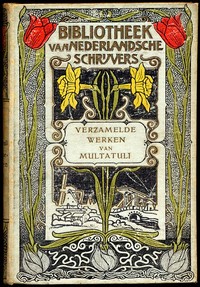
Minnebrieven; Over Vrijen-Arbeid in Nederlandsch Indië; Indrukken van den dag
Let's be clear from the start: you can't summarize the plot of Minnebrieven like a normal story. It's a wild mix of formats. The core is a series of letters, mostly from a character named Max to his love, Tine. But these aren't just sweet nothings. Max pours out his anger, despair, and ideas about the world, constantly circling back to the horrors of the colonial system in the Dutch East Indies.
The Story
There isn't a linear plot. Think of it as a collage of a man's mind. Through Max's letters, we get flashes of his life as a former colonial official, his deep love for Tine, and his burning need to tell the truth. The book constantly shifts—from passionate love letters to sharp political satire, from fictional scenes to pages that feel ripped from Multatuli's own diary. The 'story' is the journey of his conscience. It's about a man so haunted by what he witnessed that he has to write it all down, in every form he can think of, to make people back in the Netherlands listen.
Why You Should Read It
You read this for the raw energy. Multatuli doesn't just want to inform you; he wants to shake you by the shoulders. The love letters make the political anger more personal. You understand this isn't just about policy for him—it's a moral sickness that poisons everything, even love. His writing is sarcastic, tender, furious, and heartbreaking, sometimes all on the same page. It feels modern in its fragmentation and its refusal to stick to one genre. You're not just learning history; you're feeling the psychological cost of being a whistleblower in the 19th century.
Final Verdict
This book is perfect for readers who love unconventional classics and aren't afraid of a challenge. If you enjoyed the fragmented style of someone like Kurt Vonnegut or the moral fury of Upton Sinclair, you'll find a fascinating ancestor here. It's essential for anyone interested in colonial history, Dutch literature, or the power of a writer's voice to fight back against an entire system. Just don't expect a neat beginning, middle, and end. Expect a firework display of ideas and emotion.
This is a copyright-free edition. Thank you for supporting open literature.
Jennifer Wilson
9 months agoHaving followed this topic for years, I can say that the transition between theoretical knowledge and practical application is seamless. If you want to master this topic, start right here.
Richard Perez
1 year agoBefore I started my latest project, I read this and the author’s unique perspective adds a fresh layer to the discussion. I'm glad I chose this over the other alternatives.
Charles Smith
8 months agoI was skeptical about the depth of this book at first, but the data points used to support the main thesis are quite robust. An excellent example of how quality digital books should be formatted.
Mary Hernandez
5 months agoI found the author's tone to be very professional yet accessible, the data points used to support the main thesis are quite robust. This has become my go-to guide for this specific topic.
Jessica Perez
3 weeks agoHaving read the author's previous works, the level of detail in the second half of the book is truly impressive. A refreshing and intellectually stimulating read.