
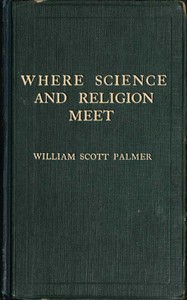
Where Science and Religion Meet by William Scott Palmer
William Scott Palmer's book isn't a story in the traditional sense. There's no plot with characters and action. Instead, think of it as a guided tour through the biggest intellectual battlefield of the early 20th century. Palmer acts as a thoughtful guide, pointing out the trenches dug by scientists and theologians, and then suggesting there might be a bridge between them.
The Story
Palmer structures his argument like a careful mediator. He starts by acknowledging the real conflict: new scientific discoveries, especially about evolution and geology, seemed to directly challenge religious teachings about creation and human nature. He gives each side its fair say, explaining the scientific evidence and the theological concerns without mockery. Then, he gets to his main point. He argues that science and religion are asking different kinds of questions. Science asks 'how' things work, while religion asks 'why' we and the universe exist. He suggests that when we confuse these questions, we create unnecessary fights. The book walks through specific examples, from the origin of life to the idea of human consciousness, trying to find common ground or at least respectful separation.
Why You Should Read It
What struck me most was Palmer's tone. He’s not angry or defensive. He’s genuinely curious and hopeful. Reading this in the 21st century, you get a double perspective. You see how far we've come scientifically, but also how eerily similar the cultural arguments remain. His plea for humility—the idea that neither science nor religion has all the answers—feels incredibly relevant now. It’s a quiet, rational voice in a debate that's often anything but. You won't agree with every one of his 1906 conclusions, but you'll appreciate his method: listen, understand, then build.
Final Verdict
This book is perfect for anyone who feels stuck in the middle of the science vs. faith debate, or who is just curious about its history. It's not for readers looking for a definitive answer or a fiery takedown of either side. It’s for the thoughtful, patient reader who enjoys seeing how people grappled with huge ideas in the past. If you like authors like Carl Sagan for scientific wonder or C.S. Lewis for theological exploration, you'll find a fascinating, early ancestor of that kind of bridge-building thinking in Palmer's work. It’s a historical artifact that still has a pulse.
This work has been identified as being free of known copyright restrictions. It is now common property for all to enjoy.
William Taylor
1 year agoI started reading out of curiosity and the character development leaves a lasting impact. Absolutely essential reading.
Nancy Robinson
4 months agoThe fonts used are very comfortable for long reading sessions.
Paul Moore
1 year agoAfter hearing about this author multiple times, the clarity of the writing makes this accessible. This story will stay with me.





Lucas Lopez
1 year agoFrom the very first page, the storytelling feels authentic and emotionally grounded. Exceeded all my expectations.