
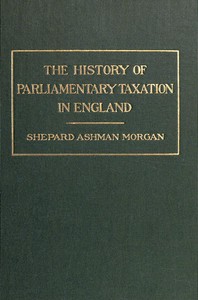
The History of Parliamentary Taxation in England by Shepard Ashman Morgan
Let's be clear: this book is not a novel. There's no main character named Sir Tax-a-Lot. Instead, Morgan takes us on a journey through several hundred years of English history, starting in the medieval period and moving forward. The 'plot' is the slow, grinding, and often dramatic evolution of a simple principle: the government needs money, but who gets to decide how much and from whom?
The Story
The story begins with kings treating the kingdom's wealth as their personal piggy bank. Parliament was weak, often just a tool to rubber-stamp royal demands for funds. Morgan then walks us through key moments—like the conflicts under the Stuart kings—where Parliament started pushing back. He shows how each financial crisis, each expensive war, became a chance for Parliament to negotiate for more power. The climax isn't a single battle, but the gradual, hard-won realization that controlling taxes meant controlling the crown. By the end, you see how this financial struggle directly paved the way for the constitutional monarchy and the systems of accountability we recognize today.
Why You Should Read It
I loved how this book made me see familiar history in a new light. We all know the Magna Carta was a big deal, but Morgan shows you the practical, financial arguments that happened for centuries afterward that actually gave those old ideas teeth. He has a knack for finding the human drama in parliamentary records—the frustration, the stubbornness, the clever legal maneuvers. It reframes history not as a series of dates and treaties, but as a very long, very tense negotiation about money and freedom. It makes you realize that our modern debates about taxes and government spending are part of a conversation that's literally hundreds of years old.
Final Verdict
This book is perfect for history buffs who want to move beyond kings and battles to understand the mechanics of power. It's also great for anyone interested in politics or law, as it shows the real-world origins of foundational principles. It's detailed, so it requires a bit of focus, but Morgan's writing is clear and direct. If you've ever enjoyed a show like The Crown or wondered about the roots of American political ideas, this book provides the deep, fascinating backstory. Just don't go in expecting a swashbuckling adventure—go in expecting to have your mind changed about how democracies are built, one tax bill at a time.
Legal analysis indicates this work is in the public domain. It serves as a testament to our shared literary heritage.
John Anderson
6 months agoI found the author's tone to be very professional yet accessible, the formatting on mobile devices is surprisingly crisp and clear. I'll be recommending this to my students and colleagues alike.
Emily Lee
11 months agoExtremely helpful for my current research project.
Elizabeth Smith
2 weeks agoExactly what I was looking for, thanks!
Susan Williams
2 years agoI wanted to compare this perspective with traditional views, the inclusion of diverse viewpoints strengthens the overall narrative. The insights gained here are worth every minute of reading.

Robert Jones
9 months agoI've gone through the entire material twice now, and the author clearly has a deep mastery of the subject matter. I appreciate the effort that went into this curation.