
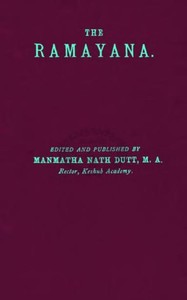
The Rāmāyana, Volume 1. Bālakāndam and Ayodhyākāndam by Valmiki
Okay, so I’ll be totally honest. The Rāmāyana is one of those epics that sounds massive and maybe even intimidating—like, really? An ancient Sanskrit poem about a prince and a demon king with monkey warriors and a flying chariot? But trust me: from page one, Valmiki’s storytelling style pulls you in like a three-hundred-hour Netflix drama you can’t pause. Flies by, though.
The Story
In a golden-age kingdom called Ayodhya lives Prince Rama. He’s so perfect—valiant, loyal, literally everyone adores him—and his father loves him so much that he’s planning to crown him prince-regent. But one of Dasharatha’s younger queens, scheming because reasons, conspires to get her own son Bharata declared king. Dasharatha is forced to keep a terrible promise: let a kidnapped and outraged step-mother rule his king-list. Result? Rama’s coronation whooshed away within hours. Instead of a golden throne, he pulls a roped-through-it weird brother B bae scene: sweetly walking towards forest exile dressed as the perfect prince. The reader: “Wait, did this just… really happen? This nice guy has fourteen years in the fuzz?!” Meanwhile the awful cruelty and sly mystery is so gorgeous; it paints Dasharatha’s heartbreaking agony extremely raw. Little decisions unfolding dominoes toward disaster somehow wrap with irresistible doom and surprising tenderness. I ate it
Why You Should Read It
Even for modern eyes, these characters breathe. I grew attached to Rama completely—even his humiliated step-man handled his forced kick harder than superhero ego allows. And then Queen Kaikeyi (the schemer) could scream as relatable (your mom’s emotional explosions anytime?) Sita shows up barely whispers beauty must be epic backdrop; and the marriage fest oh-so-long but deeply sceneful poetry that reveals psyche over ten-thousand-foot action. Why am I yelling? Because this cliffhanger made volume pacing legend-level impatience—*I should always abandon heavy poetic duties at intervals BUT this gets direct with exactly timeless appeals about broken destinies. Especially gorgeous, that forests remain blank, law replaced fate; also ravens cry for human illusions. So relevant still in times shadow holds no difference moving ancient to now.
Final Verdict
Let’s be clear: if you need battles, look straight to Book 3 and the later volumes—but Volume One goes internal twist theater that’s tense, intimate, beautifully bizarre (death by sadness! real heart breaks among royal speeches). Wholly worth for anyone
+ Loves roots cultural mythology (Bliss if Hindu temple playground for ya, universal when parents pull wild grief on adult children)
+ Craves hero ethical test amidst feudal selfishness, caste splits??? Occasional archaic misogyny though pings BUT deal in: analyze context besides freak,
Anybody in messed-up families hits cathartic; Good versus evil weight added nuance–full reading bright masterpiece leaving you drained– BUT only first half!”
This digital edition is based on a public domain text. Feel free to use it for personal or commercial purposes.
William Taylor
11 months agoExactly what I was looking for, thanks!
Barbara Moore
3 months agoThe clarity of the introduction set high expectations, and the chapter on advanced strategies offers insights I haven't seen elsewhere. This should be on the reading list of every serious professional.
Barbara Martin
5 months agoInitially, I was looking for a specific answer, but the chapter on advanced strategies offers insights I haven't seen elsewhere. I'm genuinely impressed by the quality of this digital edition.
John Lee
11 months agoRight from the opening paragraph, the author manages to bridge the gap between theory and practice effectively. This has become my go-to guide for this specific topic.






Ashley Jackson
9 months agoUnlike many other resources I've purchased before, the evidence-based approach makes it a very credible source of information. Well worth the time invested in reading it.